PAGE CONTENTS
Objectives
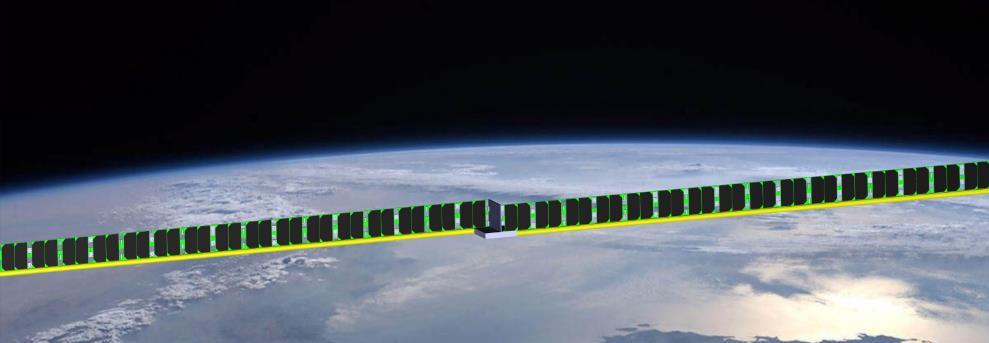
The Project Objective of 100W Deployable Solar Panels for Nanosatellites is to develop an innovative deployable solar array system designed specifically for nanosatellites, particularly CubeSats. The main goal is to design, manufacture, and test a deployable solar array capable of providing 100 watts of end-of-life (EOL) power, while being stowed within a 1U CubeSat volume (100×100×100 mm). The project aims to maximise power generation efficiency and deployment reliability, ensuring a compact and scalable design suitable for small satellite platforms up to 200 kg.
This project addresses the increasing demand for electrical power in miniaturised satellites, which are currently limited by restricted mass and volume available for photovoltaic modules. By creating lightweight, efficient, and foldable solar panels, the project is significantly enhance the operational capabilities of CubeSats, enabling their use in more power-demanding missions such as telecommunications and advanced Earth observation.
Conducted under the ESA Advanced Research in Telecommunications Systems (ARTES) programme, the project targets a Technology Readiness Level (TRL) of 6, demonstrating a fully functional prototype in a representative environment.
Benefits
The Product Benefits of the 100W deployable solar panels for nanosatellites are centered on enhanced power generation, compactness, and adaptability. By providing over 100W of power from a solar array that can be stowed in just 1U of volume, this technology enables CubeSats and other small satellites to perform missions previously limited by power constraints. The panels’ high stowage efficiency and reliable deployment mechanism ensure safe and repeatable operations both in orbit and on the ground.
The system’s lightweight structure and scalability make it suitable for a wide range of satellite classes, supporting platforms up to 200 kg. Additionally, its compatibility with standard CubeSat interfaces facilitates easy integration into existing spacecraft designs, reducing development time and cost.
Overall, the product increases mission capability, supports longer lifetimes, and expands the application of small satellites in telecommunication, Earth observation, and scientific missions, while strengthening Europe’s competitiveness in the small-satellite market.
Features
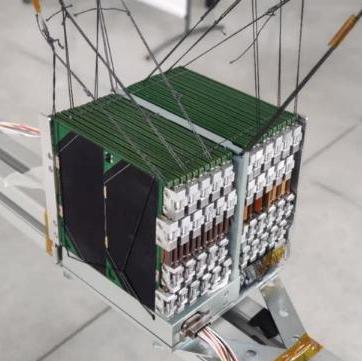
The Product Features of the DESOP (Deployable Solar Panels for Nanosatellites) system combine high-performance photovoltaic technology with an innovative mechanical design optimised for CubeSats. The solar array delivers 100 W of end-of-life power while fitting within a 1U CubeSat volume (10×10×10 cm). Its structure consists of rigid panels with CESI triple-junction GaAs solar cells, ensuring high conversion efficiency and radiation resistance in Low Earth Orbit (LEO).
The array deploys through a motorised stainless-steel ribbon mechanism, controlled by a stepper motor and integrated sensors that guarantee precise and reliable deployment. Each panel is only 2 mm thick, minimising mass while maintaining mechanical rigidity through a system of custom-designed hinges capable of 90° and 180° motion, with built-in springs to assist deployment and reduce stress on the mechanism.
Materials are fully compliant with space standards (CVCM < 0.1%, TML < 1%) to ensure outgassing and contamination control. The system also includes flexible PCBs for electrical interconnection, Teflon guides for smooth motion, and a metal box housing the deployment assembly. DESOP’s modular configuration allows scalability up to 400 W, supporting larger nanosatellite missions. The design ensures high reliability, compact stowage, and seamless integration with standard CubeSat interfaces.
Challenges
The challenges of the DESOP project include achieving 100 W power output within a 1U CubeSat volume and 2 kg of weight, ensuring reliable deployment in microgravity, and maintaining mechanical integrity under launch vibrations. Additional challenges involve thermal management, radiation resistance, and compliance with space debris and ECSS standards while minimising mass and manufacturing complexity.
System Architecture
The architecture is divided into three main sections: the deployment unit, the solar panel array, and the control and interface electronics.
At the core of the system lies the deployment mechanism, housed in a lightweight metal box that serves as both structural support and interface with the satellite. This mechanism includes a stepper motor connected to an unrolling wheel and a shaped stainless-steel ribbon, which performs the controlled deployment of the solar panels. The ribbon’s dual-U geometry ensures strength and stability in all directions, while integrated limit switches and position sensors provide feedback to the On-Board Computer (OBC) for accurate motion control.
The solar array subsystem consists of 48 rigid panels equipped with CESI triple-junction GaAs solar cells, electrically connected through flexible PCBs and protected by lightweight hinges that enable 90° and 180° rotations. Thermal, electrical, and structural design elements have been harmonised to meet ECSS standards and withstand launch vibrations, thermal cycling, and vacuum exposure.
Overall, DESOP’s architecture achieves 100 W EOL power from a compact, scalable system, ensuring reliable performance and easy integration into future CubeSat missions.
Plan
The programme duration is 24 months.
The target of the activity is a level of TRL 6.
The following milestones have been considered:
1. PDR Preliminary Design Review: T0 + 7 m
2. DDR Detailed Design Review: T0 + 11 m
3. TRR Test Readiness Review: T0 + 14 m
4. TR Test Review: T0 + 22 m
5. FR Final Review: T0 + 24 m
Current Status
The programme started on 22 October 2021 and was completed in November 2025.