PAGE CONTENTS
Objectives
The project covers the design, construction and validation of a Quantum Pulse Gating (QPG) breadboard for photon-starved optical communication, with particular emphasis on operation under daylight conditions. The underlying concept exploits mode-selective nonlinear frequency conversion to extract the information-carrying temporal mode from broadband and multimode background radiation.
The project activities include definition of representative operational scenarios for quantum and classical optical communication, establishment of system-level requirements, evaluation of alternative QPG implementations and selection of a technically feasible baseline. Compatibility with relevant communication schemes, including CCSDS optical communication standards and quantum communication protocols such as BB84, forms part of this assessment.
The technical scope also covers design, integration and experimental verification of the selected solution under representative conditions, including background radiation and atmospheric effects. A principal project objective is advancement of the integrated QPG-enhanced receiver concept to Technology Readiness Level (TRL) 5, together with the definition of a development roadmap towards operational systems.
Benefits
Conventional photon-starved optical receivers suppress daylight background using narrowband spectral filters and temporal gating. These techniques cannot isolate the information-carrying optical mode without also introducing signal loss. Quantum Pulse Gating instead provides coherent temporal-mode-selective filtering: the desired signal mode is converted to a different wavelength while most background modes remain unconverted.
This approach offers the potential for significantly improved signal-to-noise ratio in daylight conditions. For High Photon Efficiency communication, this supports improved link performance and data rates, while for Quantum Key Distribution it supports operation under background conditions that strongly limit secure key generation in conventional receivers.
Frequency conversion also enables telecom-band signals to be detected using efficient, non-cryogenic silicon single-photon detectors. Compared with architectures relying on superconducting nanowire detectors, the resulting concept offers potential reductions in size, weight, power consumption and operational complexity. Project targets include up to three orders of magnitude improvement in background rejection and a tenfold reduction in system SWaP.
Features
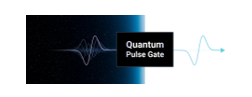
The product concept is based on temporal-mode-selective Quantum Pulse Gating using nonlinear sum-frequency conversion. The QPG process coherently overlaps a telecom-band communication signal with synchronised pump pulses in an engineered nonlinear optical waveguide, enabling frequency conversion of the selected temporal mode and its separation from the unconverted background.
The breadboard architecture covered by the project comprises the QPG nonlinear optical module, a pulsed pump-generation subsystem, optical amplification where required, signal and pump conditioning, waveguide coupling optics, spectral filtering, detection and diagnostic interfaces, and timing and synchronisation electronics.
The project activities also cover assessment of alternative nonlinear technologies and pump architectures as part of the final baseline selection. The characterisation scope includes conversion efficiency, intrinsic noise, temporal-mode selectivity, coupling losses and sensitivity to operating conditions. Performance assessment under representative daylight-background and atmospheric-turbulence conditions, together with comparison against conventional receiver filtering approaches, forms part of the verification programme.
Challenges
The main challenge is combining efficient temporal-mode-selective frequency conversion with the demanding parameters of space optical communication. Critical aspects include generation of high-energy picosecond pump pulses at high repetition rates, signal–pump synchronisation, high conversion efficiency with low intrinsic noise, and efficient coupling into nonlinear waveguides. Additional challenges include atmospheric turbulence, Doppler shifts, clock recovery, polarisation sensitivity and daylight background, while maintaining practical size, weight and power. Compatibility with both classical and quantum communication scenarios introduces further system-level constraints.
System Architecture
The reference architecture treats the QPG demonstrator as a receiver-side subsystem integrated into a representative optical ground terminal. A C-band optical signal from the space segment is conditioned and coupled into the Quantum Pulse Gate. Timing information derived from the communication link provides the basis for synchronisation of a local pulsed pump source with the incoming signal, while Doppler compensation and clock recovery form part of the receiver architecture.
Within the QPG stage, the received signal and pump pulses interact in an engineered nonlinear waveguide. Temporal modes matched to the pump undergo efficient sum-frequency conversion to a separate wavelength band, while unmatched temporal and spectral background modes remain predominantly at the original wavelength.
The downstream architecture includes spectral separation and single-photon detection, with efficient silicon detectors considered as a key option. Supporting subsystems cover pump generation and amplification, polarisation control, optical coupling, timing and control, diagnostics and performance monitoring. Verification uses representative transmitter, daylight-background and atmospheric-channel conditions.
Plan
The project plan comprises definition of operational scenarios, performance indicators and technical requirements, followed by trade-off and selection of the preferred QPG technology baseline. Subsequent activities cover preliminary and detailed design, together with early breadboard de-risking of critical technical functions. The implementation phase comprises manufacturing, assembly, integration and testing of the demonstrator. Final activities cover performance and compliance verification, assessment of the achieved TRL, and definition of a roadmap for further development and commercial exploitation.
Current Status
The project is in its execution phase following completion of the tendering and negotiation process. Current activities focus on definition of the reference operational scenarios and consolidation of system and technical requirements for the QPG demonstrator. This work includes assessment of classical and quantum communication scenarios, receiver architecture, performance benchmarks and protocol compatibility. The resulting baseline provides the input for technology trade-off, implementation selection and subsequent experimental demonstration.
Related Links
Companies