Off-the-shelf AI-powered data processing unit successfully launches aboard 16U satellite, with ESA support

Publication date

31 Mar 2026

Long exposure shot of Transporter 16's launch.
Long exposure shot of Transporter 16’s launch. Image credit: SpaceX

The European Space Agency (ESA) has supported the launch of Belgian in-orbit computing start-up EDGX’s STERNA AI-powered on-board data processing unit. STERNA will conduct in-orbit experiments as a hosted payload on a 16U satellite mission. The satellite containing EDGX’s STERNA was launched onboard SpaceX’s Transporter 16 rideshare mission from Vandenberg Space Force Base to a sun-synchronous orbit on 31 March at 12:02 pm BST (13:02 PM CET). 

The EDGX STERNA mission marks the company’s first launch into space, with support from ESA’s Industrial Competitiveness programme line, a component of the Agency’s Advanced Research in Telecommunications Systems (ARTES) programme.
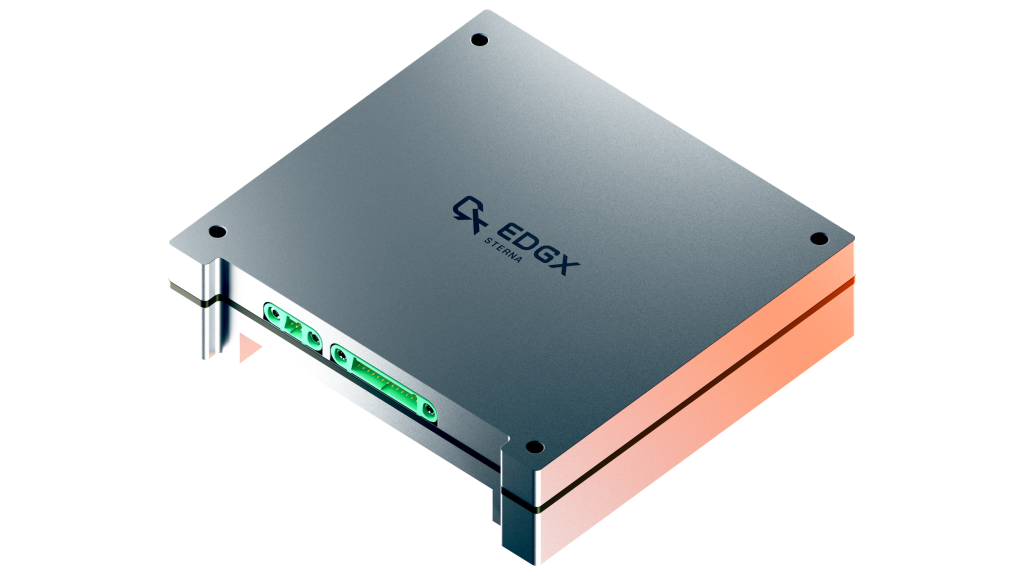
A render of EDGX's data processing unit
A render of EDGX’s data processing unit. Image credit: EDGX

The experimental mission will benchmark the performance and power consumption of the STERNA onboard data processing unit across multiple computationally intensive applications. A key test case for the STERNA data process unit will be the detection of communication signal interference, to identify and locate sources of Radio Frequency (RF) spectrum interference.

In the longer term, EDGX aims to offer in-orbit computing as a service, enabling customers to access scalable processing power in space without the need to deploy their own systems.

STERNA is a milestone towards EDGX’s goal of developing a generic commercial solution for power-efficient, data processing. The degree of processing power afforded by the combination of powerful commercial GPUs with advanced AI acceleration has yet to be deployed on spacecraft due to spaceflight’s stringent operating requirements and hazardous environment: higher processing capabilities draw more power from satellites, which are typically energy-constrained to what their solar panels can yield. Furthermore, the rigors of spaceflight expose components to intense radiation, vibrations, as well thermal and mechanical stress.

This has traditionally led satellites to use task-specific, simplified computers, reducing points of failure and sacrificing processing capabilities for reliability. However, with increasingly data-intensive applications being deployed across growing satellite constellations, the communication between the satellite and the ground has become a mission bottleneck limiting the speed, reliability and security of transmissions.

EDGX’s solution is an AI-powered data processing unit that is directly integrated onboard satellites. Satellites generate large volumes of raw data that are often difficult to process using traditional approaches, placing significant strain on downlink capacity and ground-based processing systems.
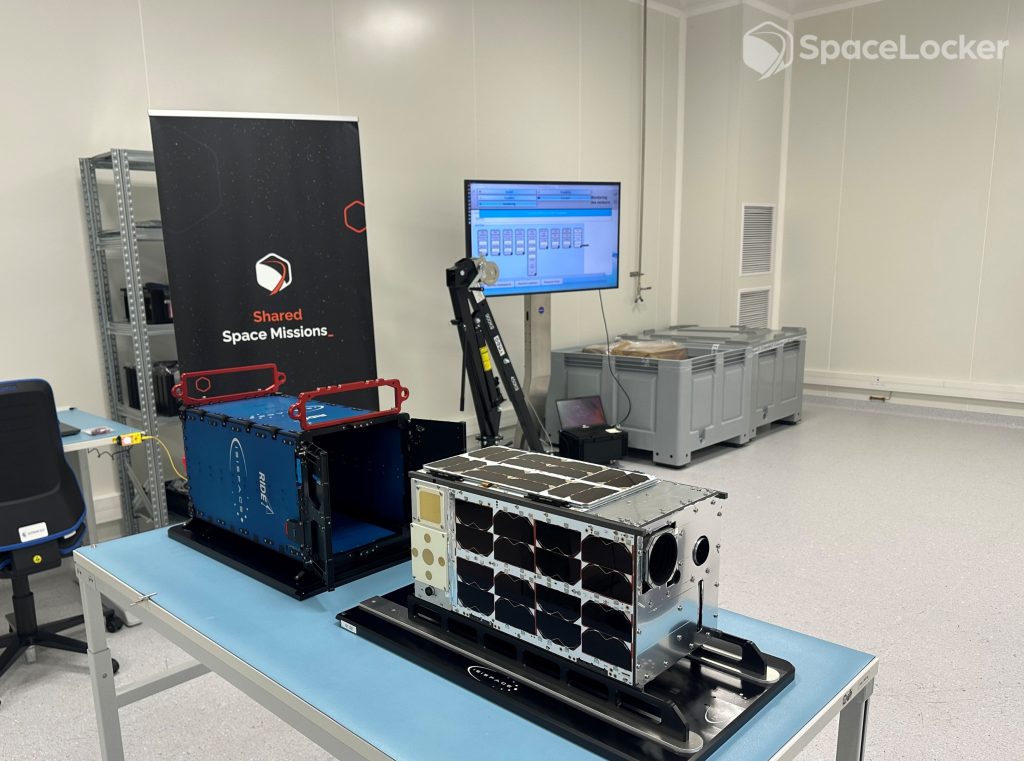
The satellite hosting EDGX's data processing unit
The satellite hosting EDGX’s data processing unit. Image credit: SpaceLocker

By enabling advanced data processing directly in orbit, the EDGX STERNA unit can analyse and extract relevant information in real time, reducing the need to transmit large volumes of unprocessed data to Earth. This significantly optimises bandwidth usage and improves the speed and efficiency of satellite operations.

“Onboard computing is crucial to many of the future applications we are working on at ESA,” said Domenico Mignolo, Head of Technology and Products Division at ESA. “EDGX’s novel solution and fast-paced approach takes advantage of the full European value chain and shows how quickly we can send brand new innovations into orbit.”

“With support from the European Space Agency, EDGX took a computing concept from idea to launch in under two years,” said Wouter Benoot, Co-Founder & CTO at EDGX. “Our work demonstrates how startups can effectively collaborate with ESA in a fast-paced environment, pushing the European innovation mindset.”
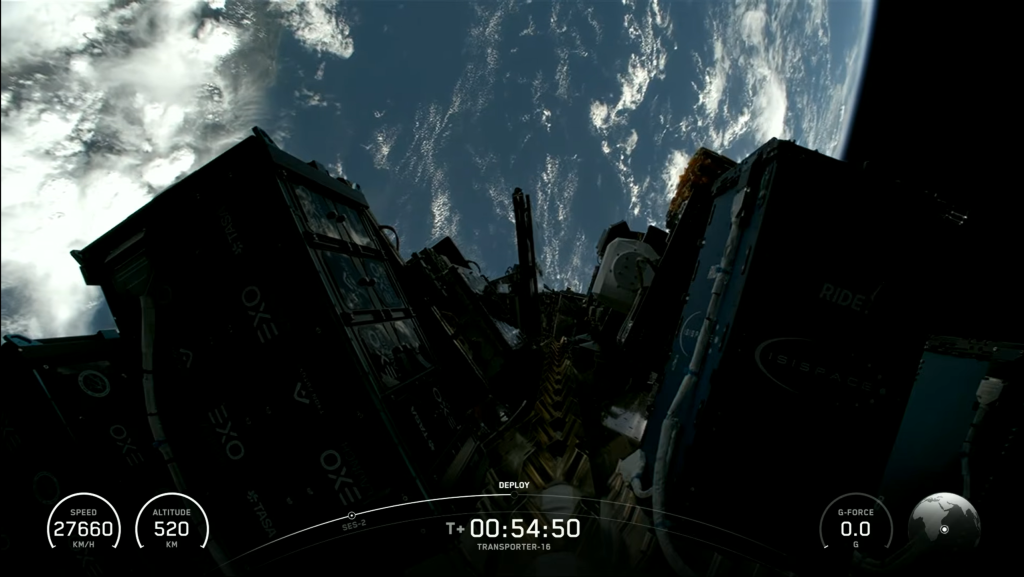
View of the CubeSat deployers on the launch vehicle's second stage.
View of the CubeSat deployers on the launch vehicle’s second stage. Image credit: SpaceX

With support from ESA’s ARTES 4.0 Industrial Competitiveness, the Belgian company leverages the NewSpace model to rapidly test cutting-edge technology: EDGX uses an off-the-shelf AI chip to circumvent the traditionally lengthy and costly development cycle involved in making innovations space-worthy. By launching the first generation of their onboard data processing unit directly into space as a payload hosted alongside other experiments on a single satellite, EDGX will be able to collect invaluable performance data whilst demonstrating problem-solving for a variety of applications in real operating conditions. This approach will help the company accelerate its technology development as well as its time-to-market.
Finnish tech company showcases ESA-supported embedded fabric antenna capable of GEO satellite connectivity

Publication date

25 Feb 2026

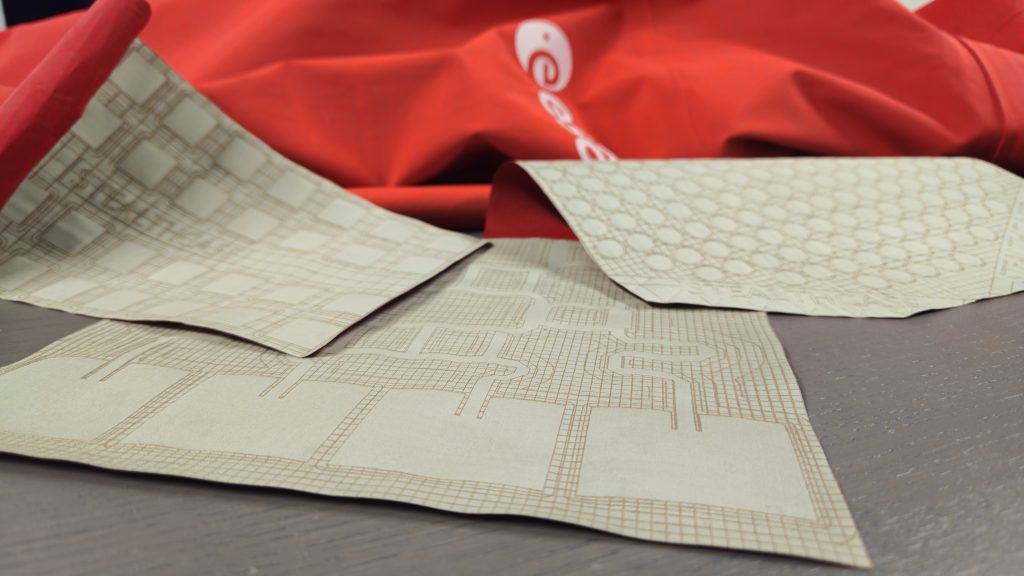
A prototype of the fabric antenna. Credit: Stealthcase

WEARABLE ANTENNAS ON MOUNTAINTOPS

In an advance for innovative internet–of–things satellite connectivity, Stealthcase, a Finnish company successfully demonstrated connectivity with satellites in geostationary (GEO) orbit. This was achieved using a wearable textile antenna initially developed under the European Space Agency’s Advanced Research in Telecommunications Systems (ARTES) programme. The demonstration was conducted in real world conditions, with the fabric antenna maintaining a stable connection to satellites 35,000 km away. This experiment showcases the potential of new materials solutions as the adoption of non–terrestrial–network and internet–of–things expands.

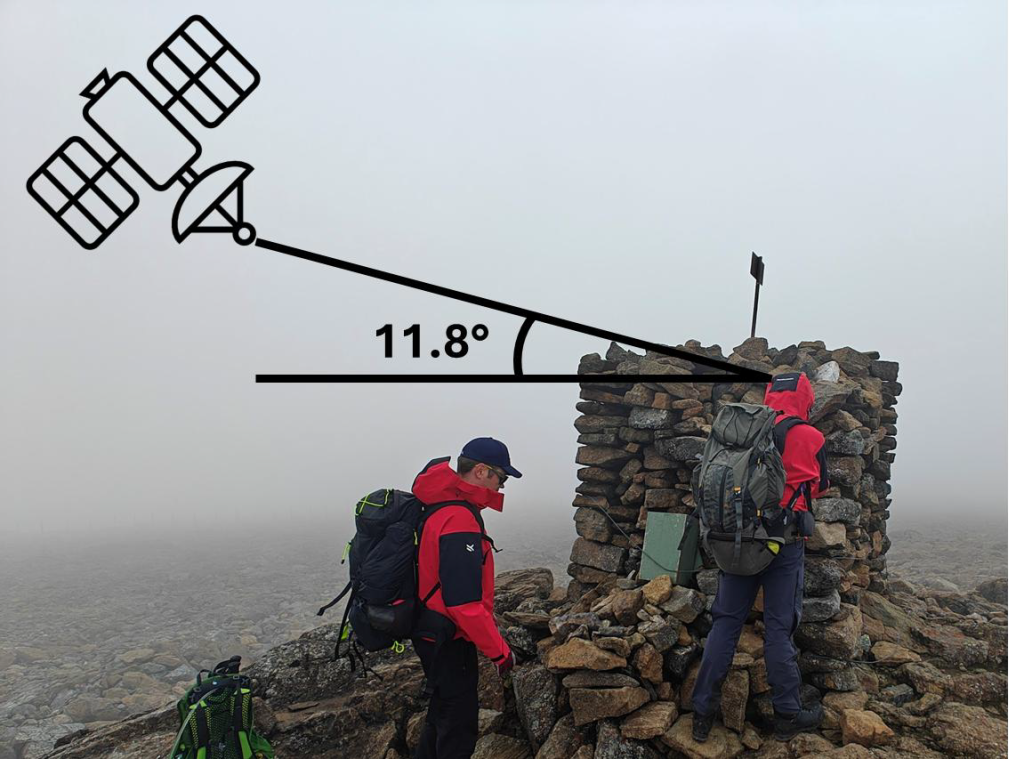
The real–world test was held at Halti, a fell at the Norway–Finland border; two teams of hikers wearing jackets lined with Stealthcase’s textile antenna – produced in collaboration with the eponymous Halti clothing brand – tested the connectivity by exchanging messages as one group climbed, and the other stayed at lower altitudes. The fabric antenna, incorporated directly into the hiker’s jackets, maintained a strong signal connection with satellites in geostationary orbit, even in expected blind spots, such as the low–altitude area in the shadow of the mountain.

The test team wearing the textile-antenna-equipped jackets. Imaged credit: Teemu Jaakkola, Radientum

THE CHALLENGE: SIZE VS PERFORMANCE VS RUGGEDNESS

Antennas require a specific size relative to the wavelength they operate on to function optimally. Reducing their size to fit them on compact and handheld devices therefore incurs a trade–off in performance – and a commensurate increase in price. Concurrently, textile antennas thus far have been limited by existing manufacturing techniques and materials, restricting performance and making them ill–suited for daily use.

COMBINING INNOVATIONS

Stealthcase’s approach blends innovative laser processing techniques with groundbreaking antenna technology to overcome this challenge – bringing together ingenious manufacturing with ESA–supported research into antenna technology.

Leveraging the production techniques developed to process coated glass into energy–efficient windows that also let through signals, the Company was able to ablate conductive fabrics into a flexible fabric antenna. The antenna technology itself builds on prior work started under the ARTES programme to create an L–band satellite phone antenna capable of communicating with satellites in low Earth orbit (LEO).

“You can build something in a lab, write a paper and be done with your project. We want to build something that works, something that lasts,”

Juha Lilja, CTO at Stealthcase

BUILDING A RUGGED PRODUCT

The novel production method allowed Stealthcase to overcome a significant obstacle to the usability of textile antennas – weathering real life wear and tear. Fragile coaxial soldering and conductive adhesives having proved unreliable, the Company patented an impact–tolerant RF interface, integrating circuit boards directly with conductive fabrics. This elegant solution enables a new approach to the traditional trade–off for antennas: by building them directly into the fabric with no wires or snappable parts, the antennas can grow as big as the surface of the object they are sown into.

REAL–WORLD PERFORMACE

Stealthcase’s technology merges RF circuitry with conductive fabrics, enabling customisation to different frequency bands – from VHF up to GHz frequencies. By turning the entire fabric’s surface area into an antenna, the Company is able to

adapt the LEO antenna technology developed with ESA for GEO communications, maximising both power and range to operate on S–band.

During tests, the wearable fabric antenna performed as well as – and sometimes better – than smartphone antennas. The textile satellite transceiver achieved low variation, low loss signal, with as much as ten times less interference than phones. Its Specific Absorption Rate (SAR) was measured by Radientum at 0.15 Watt per kilogram at 868 Mega Hertz ISM bandwidth 20 decibel-milliwatts continuous wave transmission power with 10 grams tissue averaging.

In real conditions, the performance speaks for itself: The fully integrated wearable satellite messenger in the Halti jacket provided two–way connectivity through a GEO satellite link.

A diagram indicating the connection angle of the GEO satellite. Image credit: Stealthcase

MADE–TO–ORDER CONNECTIVITY

Stealthcase’s manufacturing process makes this innovative satellite communication solution highly customisable and affordable. By adapting its laser–based processes, the Company can produce textile antennas and soft, conformal components in a scalable and repeatable manner.

The immediate applications for embedded satellite communications can help improve safety for emergency services, first responders and remote workers by replacing bulky equipment with seamless, accessible connectivity where no terrestrial network exists. This solution also meets with emergent trends in IoT applications, making its resilient, customisable design an enabler of innovation for future applications.

“Turning clothes, life rafts, and more into antennas makes sure we can keep people connected when they need it the most,” said Hoda Nematollahi, Antenna Engineer at ESA. “Stealthcase’s work is a great example of the unexpected solutions and innovations that come out of ESA-supported research to enable new businesses and applications.”