New 5G project to expand bandwidth and enable next-generation broadband services launched in Italy

Publication date

26 May 2026

The European Space Agency (ESA), together with the Italian Space Agency (ASI), has announced the start of a new activity led by Italian small satellites manufacturer, Tyvak International, to enable enhanced 5G broadband connectivity for satellites on non-geostationary orbits.

The project, titled Time Division Duplexing Experiment (TIDE), is scheduled to complete feasibility studies by end of 2026 and begin preparations for in-orbit experiments by 2027. TIDE is supported by ESA’s Space for 5G/6G and Sustainable Connectivity programme line, under the Agency’s Advanced Research in Telecommunications Systems (ARTES).

This experiment aims to address the issue of synchronisation, a key challenge to the widespread deployment of a hybrid network comprising both terrestrial and non-terrestrial (TN/NTN) infrastructure. TIDE will develop and test technologies to demonstrate the feasibility of using time division duplexing (TDD) mode to replace the traditional frequency division duplexing mode. To do so, the in-orbit experiment’s objectives will be twofold: to test communications between the planned in-orbit demonstrator and ground stations over Ka-band using TDD; and to explore the benefits of TDD for 5G-enabled satellite communications for satellite on non-geostationary orbits (NGSOs).

The project’s all-Italian consortium builds on successful relationships fostered by Tyvak International and ESA on the LIDE activity, and includes Celeste Technologies, experts in satellite systems for non-terrestrial networks, as well as PICOSATS. PICOSATS will contribute its know-how in telecom payload implementation and advanced satellite communications solutions, while Celeste Technologies will develop mission-critical smartgNB software, compliant with international 3GPP standard and enabling communications with terrestrial 5G networks.

“The Space for 5G/6G and Sustainable Connectivity programme line continues to deliver significant value for the future of satellite telecommunications, and TIDE represents a concrete example of how industry in Italy and other ESA Member States is able to lead this transformation. The collaboration with Tyvak International and its partners confirms the advantage of a cohesive and highly specialised industrial ecosystem in strengthening Europe’s autonomy,” said Antonio Franchi, Head of ESA’s Space for 5G/6G & Sustainable Connectivity programme.

“This new contract with ESA represents the natural continuation of the work begun with the LIDE mission, whose excellent results have confirmed the effectiveness of our technological approach and our ability to deliver,” said Margherita Cardi, VP Programs and Business Development of Tyvak International. “This renewed trust testifies to the strength of a well-established partnership and the value of Italian expertise in the development of miniaturised satellite solutions for telecommunications. For years, we have been working continuously with our partners on the design and development of advanced systems, contributing to the evolution of connectivity infrastructure. In this context, our commitment to enabling 5G services via satellite plays a strategic role for both government and commercial applications.”

TIDE will add a stepping stone to the development of hybrid space-Earth infrastructure capable of supporting future networks. With growing interest from the market, TIDE will help position Europe in a leadership role and answer demand with market-ready solutions, mature products and technical expertise for global TN/NTN connectivity.
ITA Airways adopts satellite technology developed by ESA and Viasat to upgrade safety and fuel efficiency

Publication date

16 Dec 2025

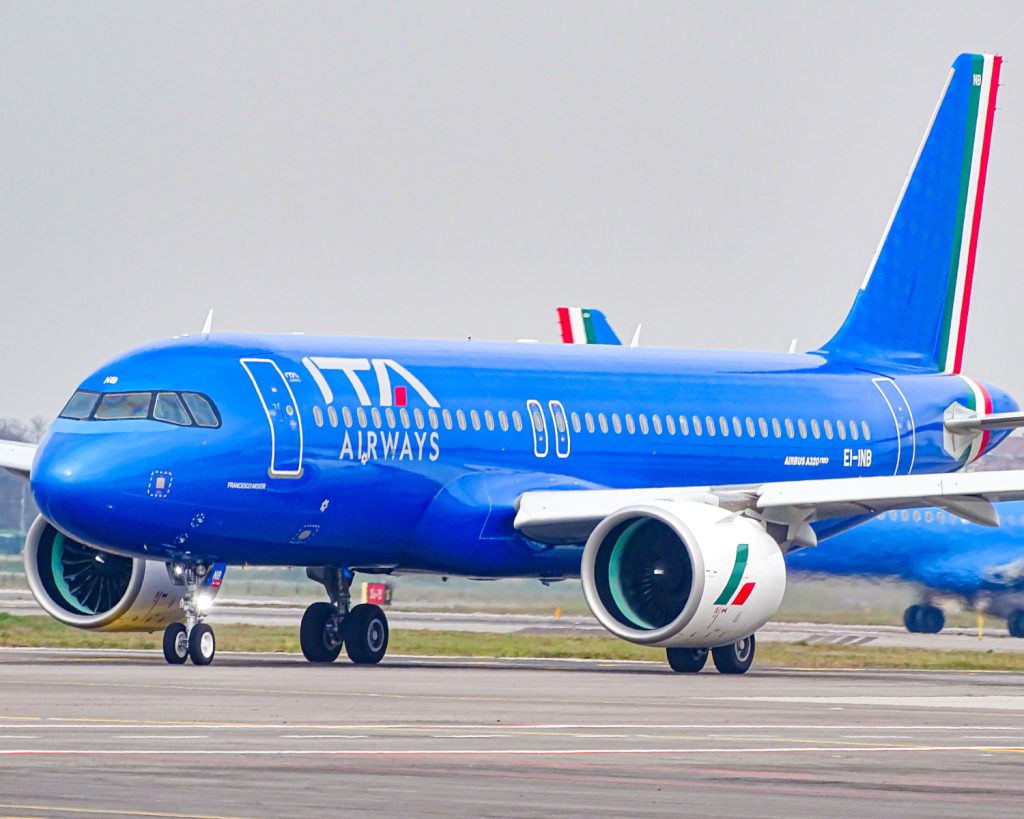
 An ITA Airways A320neo, the type that will feature the Iris terminal. Image credit: ITA Airways 

ITA Airways, Italy’s reference airline, has announced its adoption of the Iris system for Air Traffic Service (ATS), jointly developed by Viasat and the European Space Agency (ESA) Directorate for Connectivity and Secure Communications.

Iris will enable ITA to optimise aircraft routes and fuel consumption, increasing flight safety whilst curtailing CO2 emissions and delays. These applications are empowered by a satellite data link service complementing traditional ground-based infrastructure.

The introduction of Iris removes a bottleneck created by the explosion of data generated by modern aircraft. By distributing the data across ground and satellite networks, Iris creates a multi-link capability that will enable airlines and Air Traffic Management (ATM) to handle a larger volume of data in real time.

Since 2015, Viasat, a global leader in satellite communications, has partnered with ESA as an Iris Service Provider and key project partner (ESSP) to power the Iris service with their SwiftBroadband – Safety (SB-S) connectivity platform.

The Iris program is funded and promoted by ESA Connectivity and Secure Communications under the Space Systems for Safety and Security (4S) strategic programme Line of its Advanced Research in Telecommunications Systems (ARTES) programme, and in line with the Single European Sky ATM Research (SESAR) launched by the European Commission.

Iris is the only validated technology capable of pioneering these modern Airline Operational Communication and ATS standards. It showcases ESA Connectivity and Secure Communications’ commitment to delivering practical space-based applications through partnerships with Europe’s space industry and commercializing viable solutions to concrete challenges.

“With the addition of ITA Airways to the Iris service, another milestone has been achieved in supporting the European Commission’s Single European Sky vision for an efficient and environmentally friendly European airspace. The adoption of Iris is a key milestone for space-based solutions, supporting European Air Traffic Management, which will – in turn – pave the way for global use. By supporting Iris through an ESA public-private partnership, we are delighted to combine our expertise with those of leading aviation actors across the continent and beyond it,” said Laurent Jaffart, Director of ESA’s Connectivity and Secure Communications.

“We’re thrilled to see Iris taking to the skies on ITA Airways’ flights across Europe,” said Joel Klooster, SVP Flight Safety and Advanced Air Mobility at Viasat. “ITA has been committed to the goals of the Single European Skies initiative for a long time, and it’s been fantastic to work so closely with them, as well as our partners ESA and ESSP, to bring the benefits of Iris’ next-generation technology to more flights and passengers across Europe. We look forward to seeing success with these flights, and to rolling out the program across more routes and airlines soon.”

Iris will follow an initial deployment on four Airbus A320neo across the ITA fleet. One aircraft has already been fully operational since August 2025, introducing Iris in Europe with a view to export its gains in safety and security around the world.

How ESA supported the demonstration of spatially combined amplifiers across Ka and Q Bands

Publication date

30 Apr 2025

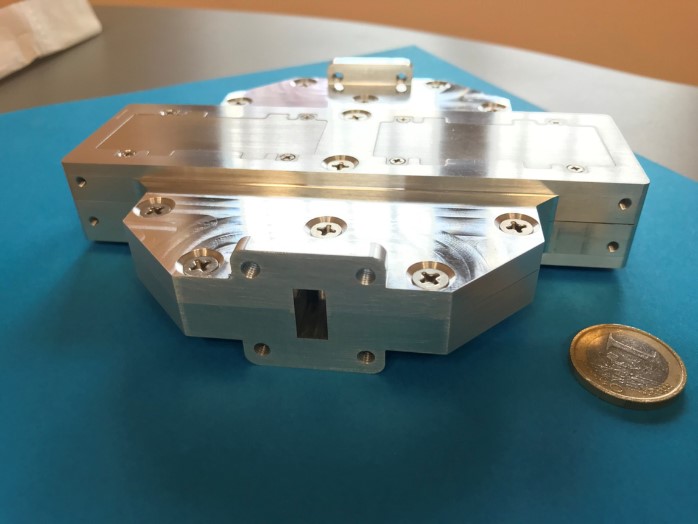
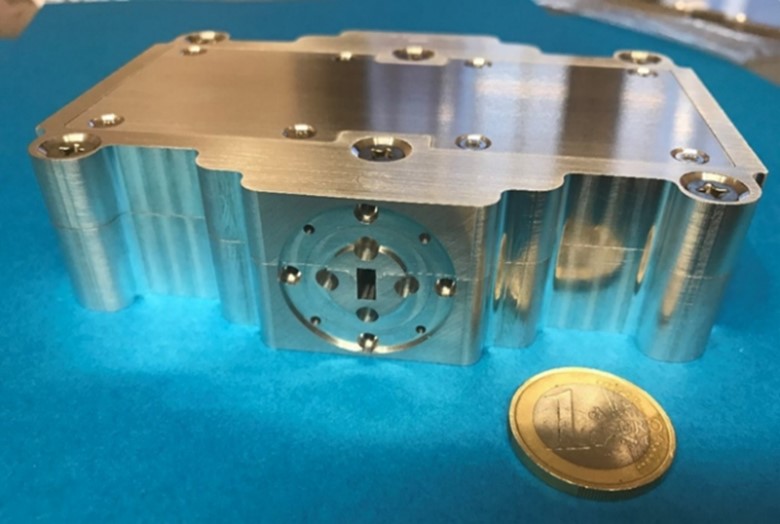
The European Space Agency (ESA) remains a key supporter of advanced satellite technologies, as shown through the “Spatial Power Combining Amplifiers at Ka and Q/V Bands for Telecom Satellites” project. The successful project marks the demonstration of spatially combined amplifiers in a single waveguide across Ka and Q frequency bands, a testament to the collaborative potential of European space innovation.

The project was developed by an Italian consortium, led by ST4I – Space Technologies for Innovation, who worked in partnership with MITEC, NHOE and Systems Development & Support S.r.l. Driven by ESA’s Connectivity and Secure Communications directorate through its Advanced Research in Telecommunications Systems (ARTES) Competitiveness and Growth programme, supported by ASI (Italian Space Agency) the project worked to develop a new approach to satellite power amplification that aims to enhance reliability of power amplifiers in satellite-based communications.

ESA has been instrumental in supporting the de-risking this technological development, providing the support necessary to transform an innovative concept into a tangible technology. The technology developed worked to address two critical challenges in satellite payload design: reduction in size and system reliability.

Traditional satellite power amplifiers have been constrained by bulky designs and high-power consumption. The new spatial power combining amplifiers (SPCAs), crafted using advanced Gallium Nitride on Silicon Carbide (GaN on SiC) technology, represent a step forward in engineering. These technologies are already enabling applications that could benefit from the use of highly efficient solid state power amplifiers, electronic devices which use transistors instead of vacuum tubes, thereby amplifying radio frequency (RF) signals to allow for higher reliability and reduced size.

The amplifiers feature “graceful degradation” – an engineering solution that prevents complete system failure by distributing performance across multiple components. These satellite technology improvements make communications more reliable. The new amplifiers offer many benefits: they reduce satellite weight, increase data capacity, improve system reliability, and can be used in many space and ground communication systems.

The project works to improve Very High Throughput Satellite (VHTS) systems, focusing on downlink communications that use specific frequency ranges: Q/V band (37.5-40.5 GHz) and Ka band (17.7-21.2 GHz) – particularly for VHTS multi-beam systems. By using GaN on SiC technology, they’ve created a smaller, more efficient and reliable power amplification system that could completely transform satellite payload.

“Working alongside ST4I and partners, the project has showcased how the support of innovative SMEs coupled with de-risking of advanced technologies enables technological evolution,” said Domenico Mignolo, Head of the Technology and Products Division and ARTES Core Competitiveness Programme Manager, within ESA’s Connectivity and Secure Communications. “Supporting these high-potential concepts from challenging theoretical innovations to mature technologies can help revolutionise satellite payload design.”

“ST4I wish to thank ESA for the constructive support on this successful development carried out within the specific frame of the ESA ARTES C&G – Technology Phase,” said Lino Russo, Managing Director of ST4I. “The key objective followed by ST4I within the SPCAs development was to search the best compromise among electrical requirements, small size, low weight and high reliability. This technology could also pave the way to new payload and antenna architectures, in particular Active Antennas.”