ESA, Airbus Defence and Space and Weeroc move to accelerate commercialisation of made-in-Europe electrical component vital to satellite operations

Publication date

18 Jun 2026

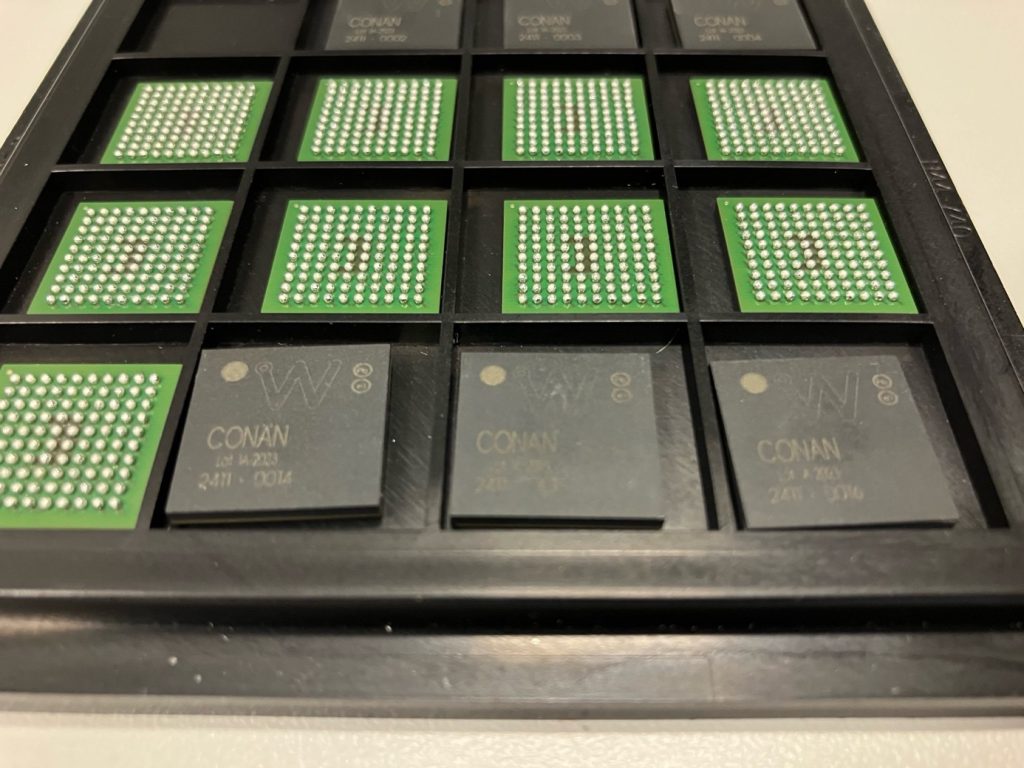
A set of CONAN ASIC chips
A set of CONAN ASIC chips. Image credit: Weeroc

The European Space Agency (ESA), with French company, Weeroc, and European aerospace prime, Airbus Defence and Space, is supporting the development and commercialisation of a programmable latching current limiter crucial to spacecraft power distribution: the CONAN Application Specific Integrated Circuit (ASIC). This sophisticated product showcases a wholly European solution accelerated through ESA’s Advanced Research in Telecommunications Systems (ARTES) 4.0 programme.

Stable electrical power is indispensable to the normal operation of spacecraft components, as well as their mission-specific payloads. However, orbital conditions are notoriously hazardous, subjecting spacecraft to taxing temperatures and radiation, and limiting access to power to onboard solar panels and batteries. When configured as a latching current limiter, the CONAN ASIC functions much like a circuit breaker in a common household fuse box, preventing dangerous power surges – caused by radiation, in this case – from damaging or destroying electronic equipment.

Because of its importance for spacecraft operations, ESA initially identified latching current limiter technology as integral to the resilience and sovereignty of Europe’s space industry. Through the Advanced Technology (AT) stage of its ARTES 4.0 programme, ESA partnered with industry to respond to this need by setting a shared goal: to develop a programmable latching current limiter and its corresponding value chain in Europe. 

The Agency provided technological mentoring, programmatic guidance and funding, acting as a catalyst for collaboration between Weeroc, an agile SME, and Airbus Defence and Space. This support, accessed through the ARTES 4.0 programme, helps to de-risk technological development and to maximise market impact.
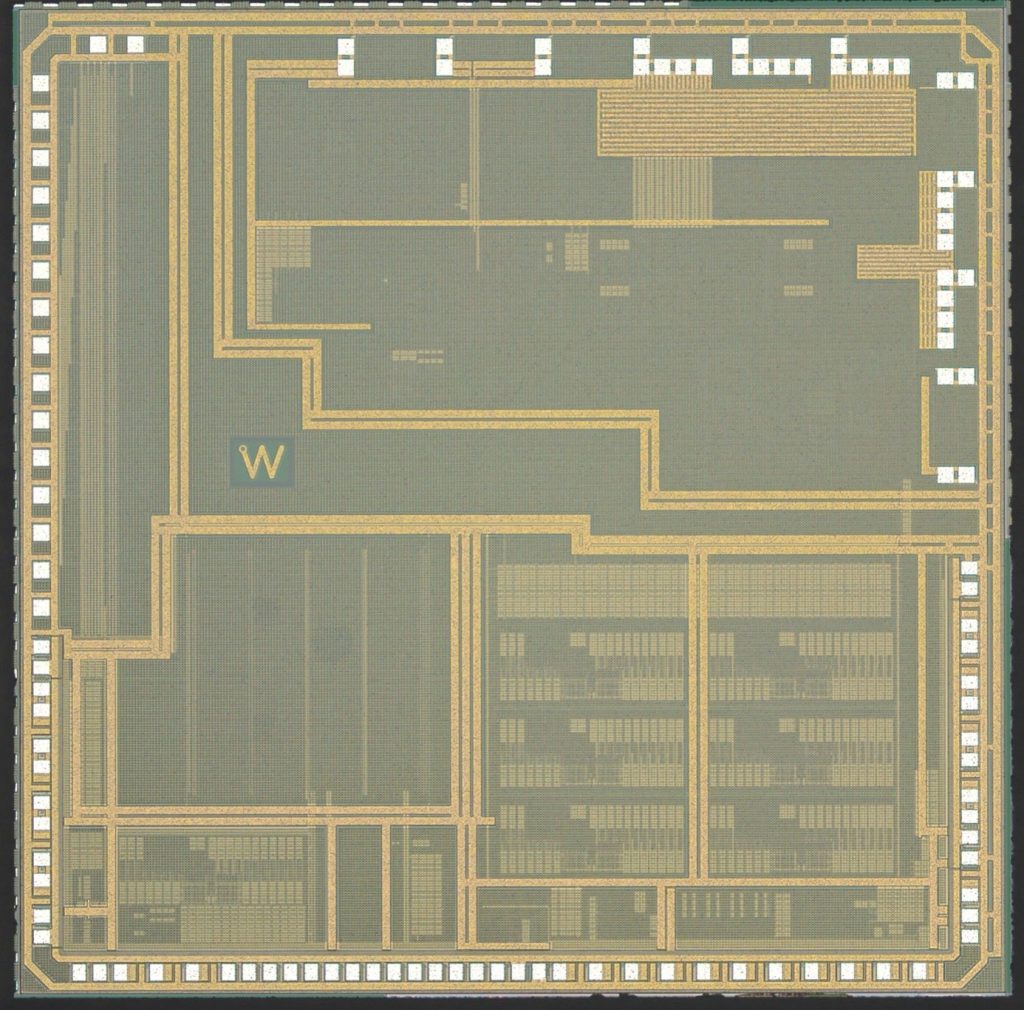
A view of of the CONAN ASIC
A view of of the CONAN ASIC. Image credit: Weeroc

Through the framework of ARTES 4.0, CONAN’s development demonstrated the characteristic attributes of the European space sector: institutionally supported transfer of know-how, and effective cooperation across the value chain. This particular blend of cooperation delivered a competitive, technically advanced and programmatically versatile technology, boasting high power density as well as adaptability to both institutional missions and flexible NewSpace architectures. These features are crucial to enabling increasingly power-hungry payloads and demanding on-orbit applications.

Rigorous testing and validation, carried out by Weeroc with ESA support, proved the robustness of the ASIC’s architecture. During testing, the CONAN ASIC was shown to be especially effective in preventing failure propagation on high-voltage power buses, making it well suited for modern satellite payloads with high energy demands. The ASIC also proved its ability to withstand high radiation dosage – up to 100 krad – whilst maintaining stable behaviour with no blocking or failure modes. This resilience is further boosted by modern telemetry and on-the-fly reconfiguration capabilities. Crucially, this programmable functionality is what allows the ASIC to be reset and resume normal operations after a power surge that would otherwise spell disaster for the spacecraft. In addition to its built-in toughness and flexibility, the ASIC’s small footprint reduces mission complexity, and helps to save on mass and volume, both of which are at a premium on spacecraft. Overall, the CONAN ASIC offers a fully European power distribution solution, contributing to the resilience of both future spacecraft, and the wider value chain.

Upon the completion of AT activities, the CONAN ASIC was awarded a co-funding contract under the Competitiveness and Growth (C&G) stage of ARTES 4.0 to translate the technology achieved under AT into a market-ready product. Presently, the ASIC is undergoing iteration and refinement with the goal of bringing it to flight worthiness at TRL-7, following optimisation pathways revealed during testing at the AT stage.

“I am very pleased this activity has led from laboratory experiments to the establishment of a credible foundation for a new product line, enabling European industry to bring a competitive offering on the global space market,” said Domenico Mignolo, Head of Technology and Products Division, ARTES Industrial Competitiveness at the European Space Agency. “The advancement of CONAN through successive stages of ARTES 4.0 demonstrates how, with the support of ESA Member States, it is possible to strengthen collaboration between European actors and deliver a competitive solution.”

ESA Supports Austrian Innovation in Multi-Orbit Satellite Communications Technology

Publication date

29 May 2025

The European Space Agency (ESA), together with the Austrian Aerospace Agency (ALR/FFG) and the Federal Ministry of Innovation, Mobility and Infrastructure, is supporting the Multibeam Ka-band Satellite User Terminal (MUKAS) project, funded through ESA’s Core Competitiveness programme, which is part of the Advanced Research in Telecommunications Systems (ARTES 4.0) programme, through its support of an Austrian consortium developing next-generation multi-orbit Satcom user terminal technology.

The project, led by Vienna-based high-tech antenna specialist PIDSO – Propagation Ideas & Solutions GmbH, brings together leading Austrian expertise from Joanneum Research Forschungsgesellschaft mbH (Graz) and S+K Consult. ESA’s support goes beyond funding, providing technical guidance and validation frameworks that help transform innovative concepts into market-ready solutions.

The multi-orbit satcom user terminal being developed addresses a critical need in today’s evolving satellite landscape. As constellations expand across different orbital regimes – geostationary (GEO), medium Earth orbit, and low Earth orbit (LEO) – connectivity solutions must adapt to these complex environments. The innovative terminal will offer seamless operation across all common satellite constellations, delivering maximum transmission performance and reliability.

The user terminal leverages a modular design and compact form factor, making it suitable for both stationary and mobile applications. This versatility opens new possibilities for delivering solutions.

ESA is proud to be supporting Austrian industry, as it strengthens its national expertise in the space sector and enhances the country’s global visibility as a hub for space innovation. With this, PIDSO is an Austrian success story with its extensive know-how in high-performance antennas and wireless communication to the project, leveraging years of experience across aerospace, automotive, and research industries.

“Through collaboration with our partners at the ALR and FFG, we’re proud to support PIDSO in developing innovative multi-orbit satcom technology, and the wider, rapidly growing Austrian space ecosystem,” said Jerome Colinas, Telecommunications System Engineer within ESA’s Connectivity and Secure Communications directorate.

“We are proud to take this next technological leap in satellite communication together with ESA. This partnership is both a great honour and a strong motivation,” says DI Dr. Christoph Kienmayer, Managing Director of PIDSO.

ESA-supported Space INSPIRE product line makes next step to launch

Publication date

28 May 2025

The first Space INSPIRE (INstant SPace In-orbit REconfiguration) propulsion system module, recently completed at Thales Alenia Space’s Belfast facility, has now arrived in Cannes for integration into the ASTRA 1Q satellite, the first of the Space INSPIRE product line which is scheduled for launch in 2026. The product line is supported by ESA’s Advanced Research in Telecommunications Systems (ARTES) programmes (Competitiveness & Growth and Novacom II), as well as French Space Agency (CNES – Centre National d´Etudes Spatiales) and UK Space Agency (UKSA).

Space INSPIRE represents a critical evolution in satellite telecommunications technology, featuring fully software-defined payload architecture that enables complete in-orbit reconfiguration. This technical capability allows satellite operators to dynamically reallocate frequency bands, power, and coverage areas throughout the satellite’s operational lifespan, enabling adaptability to shifting market demands and emerging service requirements, a new capability not found in traditional fixed-configuration satellites.

With 75% of the equipment already delivered for ASTRA 1Q, the project demonstrates how strategic public investment through ARTES can accelerate the commercialisation timeline for advanced space technologies, with the Novacom II programme being supported by ten ESA Member States.

The market validation of the Space INSPIRE platform, which will operate in geostationary orbit, is evident in the commercial adoption by multiple satellite operators including SES, Arabsat, Intelsat, Eutelsat, and SKY Perfect JSAT. Each has entrusted deploying Space INSPIRE platforms to address their individual challenges, markets and customers, from broadcasting to telecommunications and navigation services.

UK teams in Belfast prior to the propulsion module travelling to Cannes. Image credit: Thales Alenia Space

The Space INSPIRE programme exemplifies the European approach to space industry development, combining institutional support through ESA’s ARTES programme, national support through CNES and UKSA, and private sector innovation from Thales Alenia Space and its European supply chain partners. This collaborative model has proven effective in maintaining European technological sovereignty while fostering industrial competitiveness in global satellite communications markets.

“ESA is proud to have supported the technological and commercial development of the Space INSPIRE product line,” explains Etienne Brouillard, Novacom II project manager. “By providing co-funding through both the Competitiveness & Growth and Novacom II programmes, ESA and our national agency partners, have helped support Thales Alenia Space in driving an innovative product line for the benefit of our Member States’ technological and industrial competitiveness.”

“Space INSPIRE will be a game changer in the future telecommunications geostationary landscape,” said Thales Alenia Space CEO Hervé Derrey. “The satellites based on this product lines will be digitalised, extremely agile as they will be reprogrammable in orbit. I want to sincerely thank CNES, ESA and the UK space agency for supporting the development of this promising product line as well as our customers for putting their trust in our company”.

Craig Brown Investment Director at the UK Space Agency said, “The arrival of the first Space INSPIRE propulsion module in Cannes marks a significant milestone for Thales Alenia Space in the UK. The UK Space Agency is pleased to have supported the development of this novel propulsion technology through ESA, enabling a new era of flexible, software-defined satellites. “This achievement showcases the UK’s commitment to advancing commercial space capabilities that benefit both industry and society.”

ESA and RBC Signals UK kick off STORM project for dynamic satellite spectrum management

Publication date

27 May 2025

The European Space Agency (ESA) and RBC Signals UK have signed a contract to develop the Spectrum Trade Orchestration and Resource Management (STORM) platform, an innovative solution designed to transform static spectrum allocations into a dynamic commercial marketplace.

Developed under the ESA Advanced Research in Telecommunications Systems’ (ARTES) Competitiveness & Growth programme, STORM will leverage software-defined radios (SDR) to use spectrum resources more efficiently through a commercial marketplace. The platform aims to make satellite communications more accessible and cost-effective by optimising the management and allocation of radio frequency (RF) resource, benefitting a wide range of users from SMEs to international industry and governments.

The 18-month project will be led by RBC Signals UK, working alongside partners Texuna and Dione Consulting. This collaboration brings together expertise in software development, satellite communications, and regulatory compliance.

STORM will enable spectrum management, trading, efficiency and wider interoperability, between different operators and hardware parts (eg SDR, modulators, UT’s etc); giving organisations a platform to become more agile and responsive in market or business changes. STORM will progress through definition, technology, product, and demonstration phases, with commercial deployment targeted for mid-2026.

This project builds on ESA efforts, recently signing a joint statement with the International Telecommunication Union (ITU) to foster a more sustainable and responsible use of radio spectrum resources for satellite systems, as well as the Clean Spectrum Driving Innovation and Growth conference hosted at ESA HQ in Paris which brought together key stakeholders to drive economic innovation and growth through clean spectrum.

“ESA is proud to be supporting such a project that will help improve spectrum management and trading. STORM presents a step forward in supporting a more accessible, efficient, and competitive satellite communications sector” said Jerome Colinas, Telecommunications System Engineer within ESA’s Connectivity and Secure Communications directorate.

 “We are excited about project STORM and the support we are receiving from ESA & the UK Space Agency. We believe there is a large amount of underutilised spectrum and that this program will provide a market clearing mechanism enabling innovative new solutions such as satellite IoT to come to market.” said Ron Faith, CEO at RBC Signals UK.

“STORM not only opens the space industry for Texuna following 2 years of collaboration with our partners, but more importantly STORM paves the way for many other innovators to get simplified commercial access to satellite spectrum on an ad hoc basis.” said Patrick Lynch, CEO at Texuna.

“STORM is the foundation stone for the global spectrum reuse enhancement. It redefines the spectrum efficiency, unblocking the market and allowing innovative ideas and services to grow,” said Vasileios Tsiafakis, Project Director of STORM.

How ESA supported the demonstration of spatially combined amplifiers across Ka and Q Bands

Publication date

30 Apr 2025

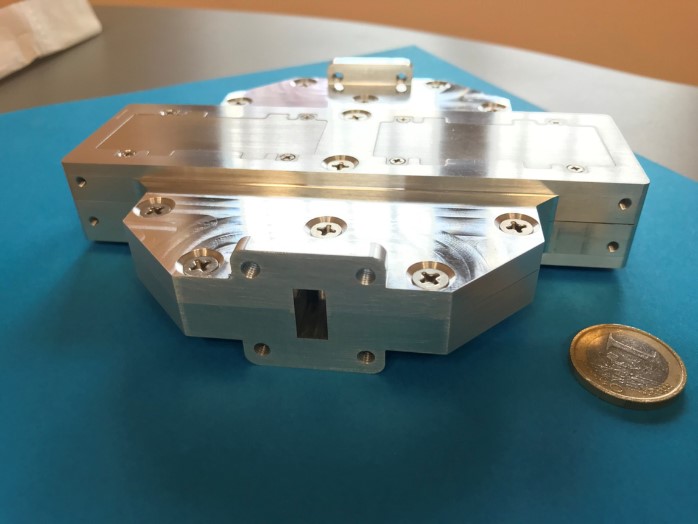
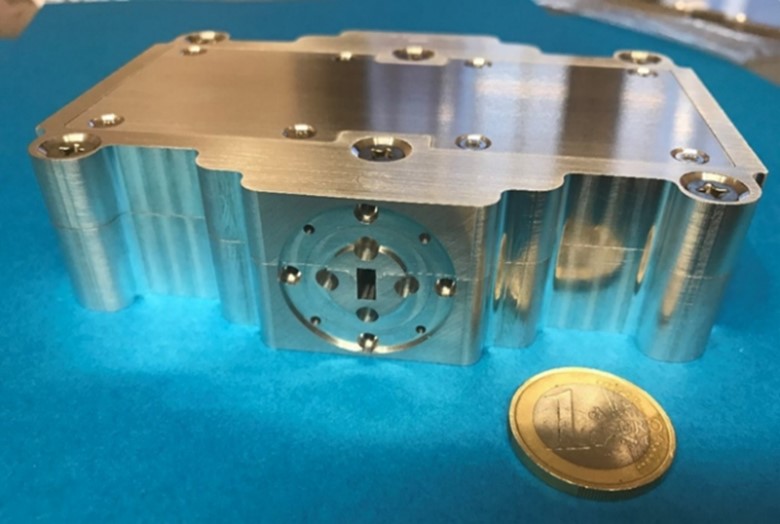
The European Space Agency (ESA) remains a key supporter of advanced satellite technologies, as shown through the “Spatial Power Combining Amplifiers at Ka and Q/V Bands for Telecom Satellites” project. The successful project marks the demonstration of spatially combined amplifiers in a single waveguide across Ka and Q frequency bands, a testament to the collaborative potential of European space innovation.

The project was developed by an Italian consortium, led by ST4I – Space Technologies for Innovation, who worked in partnership with MITEC, NHOE and Systems Development & Support S.r.l. Driven by ESA’s Connectivity and Secure Communications directorate through its Advanced Research in Telecommunications Systems (ARTES) Competitiveness and Growth programme, supported by ASI (Italian Space Agency) the project worked to develop a new approach to satellite power amplification that aims to enhance reliability of power amplifiers in satellite-based communications.

ESA has been instrumental in supporting the de-risking this technological development, providing the support necessary to transform an innovative concept into a tangible technology. The technology developed worked to address two critical challenges in satellite payload design: reduction in size and system reliability.

Traditional satellite power amplifiers have been constrained by bulky designs and high-power consumption. The new spatial power combining amplifiers (SPCAs), crafted using advanced Gallium Nitride on Silicon Carbide (GaN on SiC) technology, represent a step forward in engineering. These technologies are already enabling applications that could benefit from the use of highly efficient solid state power amplifiers, electronic devices which use transistors instead of vacuum tubes, thereby amplifying radio frequency (RF) signals to allow for higher reliability and reduced size.

The amplifiers feature “graceful degradation” – an engineering solution that prevents complete system failure by distributing performance across multiple components. These satellite technology improvements make communications more reliable. The new amplifiers offer many benefits: they reduce satellite weight, increase data capacity, improve system reliability, and can be used in many space and ground communication systems.

The project works to improve Very High Throughput Satellite (VHTS) systems, focusing on downlink communications that use specific frequency ranges: Q/V band (37.5-40.5 GHz) and Ka band (17.7-21.2 GHz) – particularly for VHTS multi-beam systems. By using GaN on SiC technology, they’ve created a smaller, more efficient and reliable power amplification system that could completely transform satellite payload.

“Working alongside ST4I and partners, the project has showcased how the support of innovative SMEs coupled with de-risking of advanced technologies enables technological evolution,” said Domenico Mignolo, Head of the Technology and Products Division and ARTES Core Competitiveness Programme Manager, within ESA’s Connectivity and Secure Communications. “Supporting these high-potential concepts from challenging theoretical innovations to mature technologies can help revolutionise satellite payload design.”

“ST4I wish to thank ESA for the constructive support on this successful development carried out within the specific frame of the ESA ARTES C&G – Technology Phase,” said Lino Russo, Managing Director of ST4I. “The key objective followed by ST4I within the SPCAs development was to search the best compromise among electrical requirements, small size, low weight and high reliability. This technology could also pave the way to new payload and antenna architectures, in particular Active Antennas.”