

LATEST NEWS
October 21, 2026 • 10:00
October 8, 2026 • 16:16
October 7, 2026 • 09:02
September 24, 2026 • 15:12
18 Jun 2026
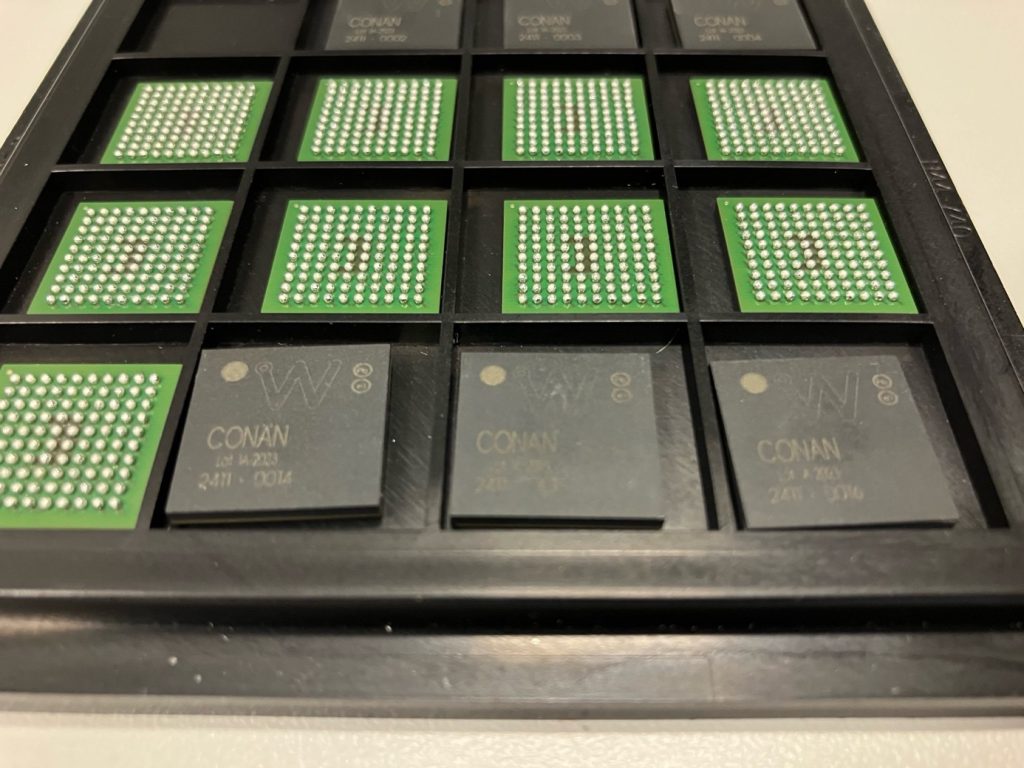
The European Space Agency (ESA), with French company, Weeroc, and European aerospace prime, Airbus Defence and Space, is supporting the development and commercialisation of a programmable latching current limiter crucial to spacecraft power distribution: the CONAN Application Specific Integrated Circuit (ASIC). This sophisticated product showcases a wholly European solution accelerated through ESA’s Advanced Research in Telecommunications Systems (ARTES) 4.0 programme.
Stable electrical power is indispensable to the normal operation of spacecraft components, as well as their mission-specific payloads. However, orbital conditions are notoriously hazardous, subjecting spacecraft to taxing temperatures and radiation, and limiting access to power to onboard solar panels and batteries. When configured as a latching current limiter, the CONAN ASIC functions much like a circuit breaker in a common household fuse box, preventing dangerous power surges – caused by radiation, in this case – from damaging or destroying electronic equipment.
Because of its importance for spacecraft operations, ESA initially identified latching current limiter technology as integral to the resilience and sovereignty of Europe’s space industry. Through the Advanced Technology (AT) stage of its ARTES 4.0 programme, ESA partnered with industry to respond to this need by setting a shared goal: to develop a programmable latching current limiter and its corresponding value chain in Europe.
The Agency provided technological mentoring, programmatic guidance and funding, acting as a catalyst for collaboration between Weeroc, an agile SME, and Airbus Defence and Space. This support, accessed through the ARTES 4.0 programme, helps to de-risk technological development and to maximise market impact.
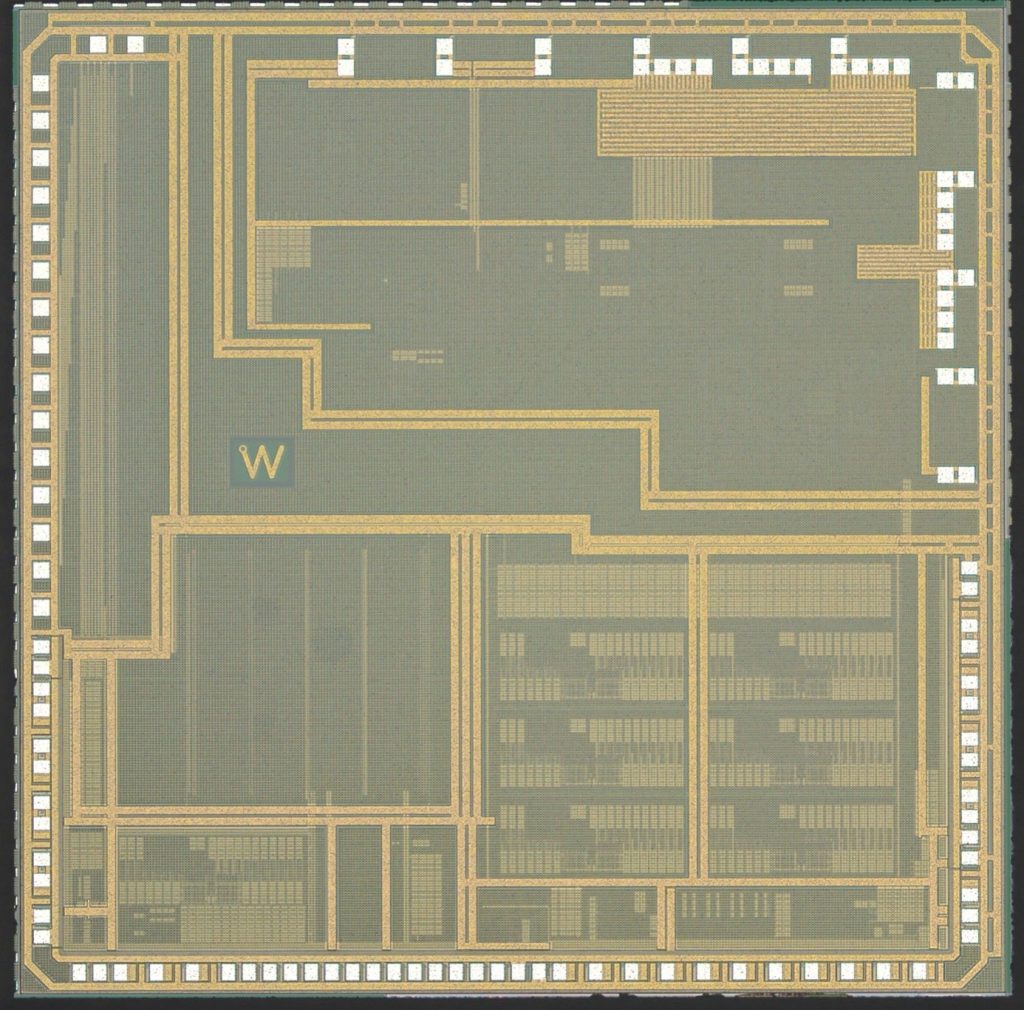
Through the framework of ARTES 4.0, CONAN’s development demonstrated the characteristic attributes of the European space sector: institutionally supported transfer of know-how, and effective cooperation across the value chain. This particular blend of cooperation delivered a competitive, technically advanced and programmatically versatile technology, boasting high power density as well as adaptability to both institutional missions and flexible NewSpace architectures. These features are crucial to enabling increasingly power-hungry payloads and demanding on-orbit applications.
Rigorous testing and validation, carried out by Weeroc with ESA support, proved the robustness of the ASIC’s architecture. During testing, the CONAN ASIC was shown to be especially effective in preventing failure propagation on high-voltage power buses, making it well suited for modern satellite payloads with high energy demands. The ASIC also proved its ability to withstand high radiation dosage – up to 100 krad – whilst maintaining stable behaviour with no blocking or failure modes. This resilience is further boosted by modern telemetry and on-the-fly reconfiguration capabilities. Crucially, this programmable functionality is what allows the ASIC to be reset and resume normal operations after a power surge that would otherwise spell disaster for the spacecraft. In addition to its built-in toughness and flexibility, the ASIC’s small footprint reduces mission complexity, and helps to save on mass and volume, both of which are at a premium on spacecraft. Overall, the CONAN ASIC offers a fully European power distribution solution, contributing to the resilience of both future spacecraft, and the wider value chain.
Upon the completion of AT activities, the CONAN ASIC was awarded a co-funding contract under the Competitiveness and Growth (C&G) stage of ARTES 4.0 to translate the technology achieved under AT into a market-ready product. Presently, the ASIC is undergoing iteration and refinement with the goal of bringing it to flight worthiness at TRL-7, following optimisation pathways revealed during testing at the AT stage.
“I am very pleased this activity has led from laboratory experiments to the establishment of a credible foundation for a new product line, enabling European industry to bring a competitive offering on the global space market,” said Domenico Mignolo, Head of Technology and Products Division, ARTES Industrial Competitiveness at the European Space Agency. “The advancement of CONAN through successive stages of ARTES 4.0 demonstrates how, with the support of ESA Member States, it is possible to strengthen collaboration between European actors and deliver a competitive solution.”
